

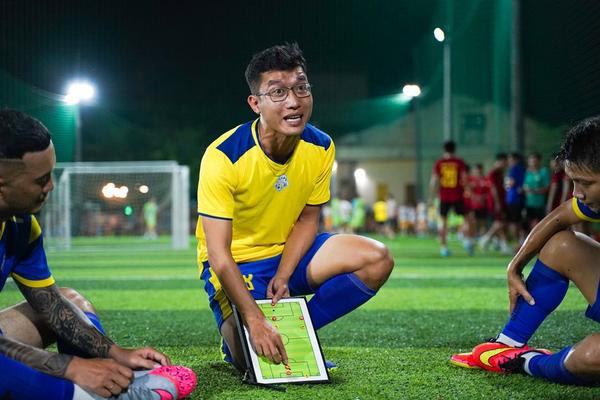
A practice can contain five excellent drills and still feel disconnected. Players collect cones, listen to new instructions, and start each activity as though the last one never happened. A useful soccer training session plan solves that problem by giving every activity a shared purpose. The warm-up introduces the challenge, the practice develops a response, and the game tests whether players can use it when decisions become messy.
Start With One Match Problem
Before choosing drills, finish this sentence: “By the end of training, I want players to recognize when to…” A clear answer might be “receive on the back foot and pass forward when pressure comes from behind.” That is more coachable than “work on passing.” It identifies a situation, a decision, and an action.
Build your soccer practice plan around what you noticed in a match. Were players hiding behind defenders? Did first touches invite pressure? Did teammates fail to offer passing angles? Choose the issue that will make the biggest difference, then decide what successful behavior would look like.
Limit yourself to two or three coaching cues. For this example, they might be: check your shoulder, open your body, and play into space when possible. Younger players may need just one cue. Save unrelated ideas for another session.
Design the Progression Backward From the Game
Make the Warm-Up Part of the Story
Begin with gradual movement and an engaging ball activity that relates to the main theme. Short passing exchanges, turns, changes of direction, and low-pressure decisions can prepare players without separating fitness from soccer. Increase movement intensity progressively rather than launching straight into maximal sprints.
For young grassroots players, a small-sided arrival game can double as the opening learning activity. U.S. Soccer’s Play-Practice-Play approach similarly begins with play, moves into focused practice, and returns to a game. You can still build appropriate physical preparation into that opening block.
Use Focused Practice to Make the Skill Visible
The next activity should give players repeated chances to solve the same problem. If the theme is receiving to play forward, a possession practice with a defender offers more useful information than unopposed passes between cones. Start with enough space for success, then increase the challenge as players improve.
When giving feedback, connect it to the decision. “What did you see before receiving?” is more useful than shouting “better touch.” Stop briefly when a shared example would help, but resist interrupting every mistake. Players need time to experiment.
Add Opposition Before the Final Game
The bridge between technique and match play is often where a coaching session plan succeeds or fails. Introduce opponents, teammates, direction, and realistic choices. Keep the same theme, but make the players decide when the skill is appropriate rather than performing it on command.
A 75-Minute Soccer Training Session Template
Imagine coaching 14 under-12 players who struggle to receive and play forward under pressure. This practice structure uses the same objective from the first ball contact to the final scrimmage. The timings are an example, not a rigid prescription; adapt them to age, weather, ability, and available field space.
Minutes 0–10: Arrival Play and Activation
Set up two small grids, each with a 3v3 game and one neutral player supporting possession. Let players explore passing lanes while gradually raising the pace. Notice whether receivers scan before the ball arrives. Keep early coaching light so everyone gets moving and involved.
Minutes 10–25: Receiving Under Pressure
In the same groups of seven, play 5v2 possession. Award a point when a player receives with an open body shape and successfully passes away from pressure. Rotate defenders frequently. Ask receivers to check their shoulders and adjust their angle before the pass travels.
If defenders struggle to win the ball, shrink the grid slightly. If receivers cannot connect two passes, enlarge it. That small adjustment is often more effective than a lengthy speech.
Minutes 25–45: Play Through a Line
Combine the group into a directional 6v6 game with two neutral players. Teams score by receiving a pass beyond a marked midfield line and retaining possession. The focus shifts from executing a touch to recognizing the moment to play forward. Rotate neutrals so everyone experiences the decision.
Minutes 45–67: Match-Like Game
Play 7v7 with normal goals and rules appropriate to the group. Initially use no special scoring condition. Watch for scanning, supportive angles, and forward passes when available. Offer one short reminder if the theme disappears, then allow the match to flow. The final game is your test, not another lecture.
Minutes 67–75: Settle and Review
Bring the intensity down with easy movement and a brief check-in. Ask players when opening their body helped and when a safer sideways pass was the better choice. Finish with one observation to carry into the next session. Build water breaks into the plan as conditions require; do not postpone needed hydration until the end.
Protect Playing Time With Better Transitions
The hidden weakness in many plans is setup time. Three minutes of moving cones between four activities consumes a surprising share of an hour. Use the same grids when possible, position spare balls nearby, and arrange pinnies before players arrive.
Write down the exact change between activities: “remove central cones, add end zones, combine teams.” A short transition instruction makes the soccer training session template usable under real coaching conditions.
Coach the Theme Without Over-Coaching
For additional practice ideas, keep a collection of first-touch soccer drills, small-sided soccer games, and dynamic soccer warm-up activities that fit different session goals. Choose from those resources only after defining the challenge; otherwise the drill library starts controlling the plan.
Frequently Asked Questions
How many drills should a soccer practice include?
Three or four connected activities are often enough, especially when an arrival game and final match are included. Quality of repetitions and transitions matters more than the drill count.
Should every soccer training session follow the same format?
No. Consistent principles help, but match schedules, age groups, training loads, and objectives change. Keep the purpose clear while adjusting duration and activity design to the players in front of you.
How do I know whether the session worked?
Look for the target decision in the final game. Did players scan earlier, create better angles, or recognize forward options? Note what improved and what still needs practice instead of judging success by whether the drills ran perfectly.
What if an activity is too difficult?
Give players more space, reduce defensive pressure, or add a supporting neutral player. Restore challenge gradually once they can make and explain the intended decision.
Build a Session That Connects
A strong soccer training session plan does not need elaborate equipment or a new drill every ten minutes. It needs one meaningful match problem, a sensible rise in difficulty, realistic playing time, and a final game that reveals learning. When players can see how one activity leads into the next, practice begins to feel like soccer rather than a collection of tasks.