

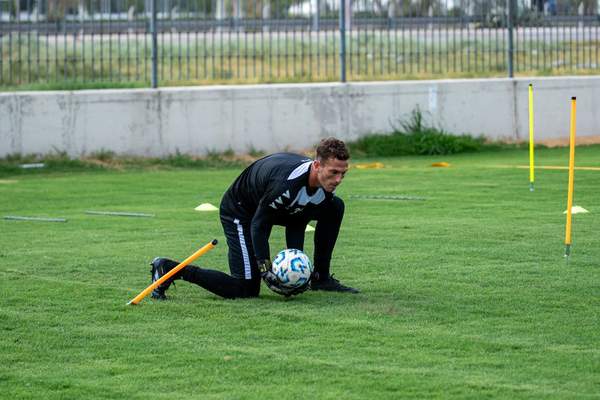
The first hard sprint of a soccer session should not be the first time a player moves quickly. A useful warm-up creates a bridge between arriving at the field and handling the stops, turns, tackles, and quick decisions that follow. The best soccer warm-up drills do this in stages: loosen up moving joints, switch on key muscles, introduce the ball, and raise the pace without exhausting the team.
For most recreational teams, a focused 15–20-minute routine is a practical starting point. Adjust the duration to the players’ age, the weather, and the demands of the session.
Build Your Warm-Up in Five Connected Phases
A dynamic soccer warm up works best when each activity prepares players for the next. Set up a 15–20-yard lane and a small passing grid before players arrive. With that simple layout, the group can move continuously instead of standing around while cones are rearranged.
1. Easy Movement to Raise the Tempo (3 Minutes)
Start with a relaxed jog across the lane, followed by side shuffles, backward jogging, and gentle skips. Cover each direction once or twice, keeping strides comfortable. Players should begin breathing a little faster but still be able to talk.
Ask everyone to keep their heads up during backward movement and leave enough space between teammates. This phase is about becoming comfortable in motion, not winning a race.
2. Mobile Hips, Ankles, and Hamstrings (3 Minutes)
Next, choose mobility drills that resemble actual soccer movements. Try walking knee hugs, controlled leg swings, hip-opening steps, and walking lunges with a gentle upper-body rotation. Perform roughly five to eight smooth repetitions per side rather than forcing a stretch.
Include ankle rocks while standing in a staggered stance: bend the front knee forward over the toes while keeping the heel down. Avoid aggressive bouncing or pushing into pain.
3. Activation and Landing Control (3 Minutes)
Activation exercises bring attention to muscles and movement patterns used during quick changes of direction. Have players complete six controlled bodyweight squats, a few alternating reverse lunges, and brief single-leg balances. Finish with three small two-foot hops, landing quietly with bent hips and knees.
Quality matters more than volume. Watch for knees collapsing inward during squats or landings, and encourage players to stay balanced over their feet. A structured program such as FIFA 11+ also uses running, strength, balance, and jumping activities, but this shorter sequence should not be mistaken for the complete program.
4. Ball Touches and Passing on the Move (4 Minutes)
Now give players a reason to scan and adjust their feet. In pairs, stand roughly six to eight yards apart. Pass with two touches for one minute, then take a first touch across the body before returning the ball. After that, pass through cone gates while jogging to new angles.
For a group of twelve, create three squares with four players each. One player passes and follows the ball while the receiver opens their body toward the next teammate. Increase the passing speed gradually; rushed, inaccurate passes do not make a better warm-up. This is a natural lead-in to first-touch soccer drills during the main practice.
5. Short Accelerations and Reactive Turns (3–4 Minutes)
Finish by connecting technique to match movement. Mark a five-yard approach lane, a turning cone, and a five-yard exit. Players jog in, slow under control, turn, and accelerate out. Repeat on both sides. Then use two or three short runs that build from moderate to brisk speed, with easy walking recovery.
Add a coach’s point or verbal cue to select the turning direction. This gives players a little decision-making practice without making the drill chaotic. Save maximal sprints and hard contact for appropriate training, once athletes are ready.
Make the Routine Fit the Next Activity
A pregame soccer warm up and a technical training warm-up share the same foundation, but they need different final touches. Before a match, gradually add sharper passing, controlled changes of direction, and brief position-specific movements. Defenders might rehearse side-on shuffles; attackers might check away before receiving. Goalkeepers need their own progressive handling and diving preparation with a qualified coach.
Before a possession-focused practice, extend the passing square into a low-pressure rondo. Before an agility session, spend more time rehearsing deceleration and planting technique. Related practice on agility and change-of-direction drills should develop those skills further, rather than asking a warm-up to do the entire job.
For younger players, shorten explanations and turn the movement phase into a simple follow-the-leader game. For older or highly trained players, coaches can add more structured neuromuscular work appropriate to the squad.
Keep Players Ready Without Wearing Them Out
Watch the quality of movement as closely as the minutes. If players are breathing heavily, losing passing accuracy, or slowing between repetitions, the warm-up may be too demanding. The final phase should leave them alert and ready, not tired.
Cold conditions may call for extra gentle movement and fewer long pauses. In hot weather, provide sensible hydration access and adjust exertion to conditions. If kickoff is delayed, brief movement and passing can help players stay prepared rather than standing still for twenty minutes.
Players returning from injury should follow individualized guidance from a qualified clinician. Anyone with pain, dizziness, or unusual symptoms should stop and be assessed rather than trying to warm through it.
Common Warm-Up Mistakes to Avoid
One mistake is starting with a long queue at a single cone. Players cool down while waiting, and only one person moves at a time. Use paired lanes or several small stations so everyone stays involved.
Another is jumping from slow stretching straight into full-speed competition. Build speed, direction changes, and technical pressure in manageable steps. Long passive stretches need not dominate the opening minutes when players should be preparing to move.
Frequently Asked Questions
How long should soccer warm-up drills last?
About 15–20 minutes is a useful practical range for many teams, although younger groups or shorter practices may need less. A full structured FIFA 11+ session generally takes around 20 minutes. The right duration depends on the players and activity ahead.
Should players stretch before a soccer game?
Dynamic movements such as lunges, leg swings, and controlled hip rotations fit naturally into a warm-up. If a player needs separate static flexibility work, it should not replace the progressive running and soccer-specific preparation.
Can soccer warm-ups include a ball?
Yes. Easy dribbling, first-touch work, and moving passes prepare coordination and attention alongside physical movement. Introduce the ball once players are moving comfortably, then raise the pace step by step.
Do warm-ups prevent soccer injuries?
No routine eliminates injury risk. Evidence supports well-delivered structured neuromuscular programs, including FIFA 11+, for reducing some soccer injuries. A casual sequence of drills should not be advertised as having the same proven effect.
Finish Ready for the First Whistle
Good preparation has a clear direction: comfortable movement becomes controlled activation, then purposeful ball work, then a few sharper soccer actions. Keep transitions short, coach movement quality, and adjust the final drills to the session. When players reach the first whistle feeling coordinated and switched on, the warm-up has done its job.