

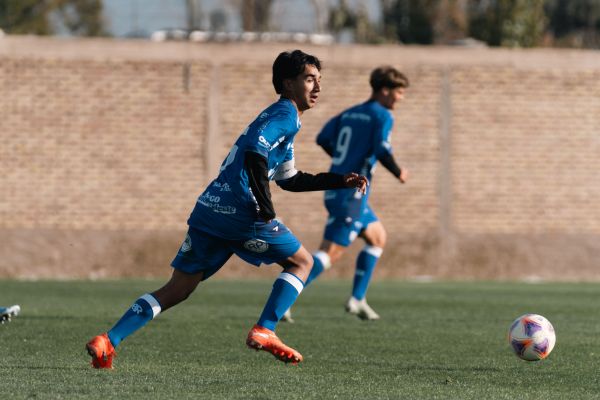
Midfielders live in the busiest part of a soccer match. They receive the ball under pressure, connect defense with attack, track runners, control the tempo, and often cover more ground than anyone else on the field. A good midfielder may not always score the winning goal, but their influence can be felt in nearly every important phase of play.
That is why soccer training for midfielders must go beyond basic passing and fitness. Midfield players need sharp awareness, intelligent movement, reliable technique, and the confidence to make decisions in crowded spaces. They must know what is happening before the ball reaches them.
The most effective training reflects those demands. Instead of practicing skills in isolation, midfielders should work in realistic situations where they must scan, react, communicate, and play quickly. The goal is not simply to become better on the ball. It is to become more useful in every moment of the game.
Understanding the Modern Midfielder’s Role
Not all midfielders perform the same job. A defensive midfielder protects the back line and helps the team build from deep areas. A central midfielder moves between both penalty boxes, supporting attacks while recovering defensively. An attacking midfielder looks for creative passes, combinations, and shooting opportunities closer to goal.
Despite these differences, every midfielder needs a shared group of qualities. They must receive the ball cleanly, pass accurately, understand space, and stay composed when opponents close them down.
Modern soccer also demands flexibility. During one phase, a midfielder may drop beside the defenders to collect possession. Seconds later, the same player may need to sprint forward and support an attack. Training should prepare players for these constant transitions rather than treating midfield as a fixed position.
Scanning Before Receiving the Ball
One of the clearest differences between average and intelligent midfielders is how often they check their surroundings. Experienced players look over their shoulders before receiving possession. They already know where pressure is coming from, where teammates are positioned, and which passing option is likely to open.
A simple scanning drill can begin with a player standing between several colored cones. Before receiving a pass, the player looks behind, identifies a color called by the coach, and then controls the ball toward a different cone. This forces the player to gather information while preparing to receive.
The drill can become more realistic by adding a passive defender, then gradually increasing the pressure. The midfielder must scan, choose the safest direction, and protect the ball with the first touch.
Scanning should become a habit, not an occasional action. Players should look around repeatedly as the ball travels, not only when it is already arriving.
Improving the First Touch Under Pressure
A midfielder’s first touch often determines what happens next. A good touch creates time. A poor one invites pressure.
Training should include passes arriving at different speeds, heights, and angles. The player might receive with the inside of the foot, the outside, the sole, or the back foot depending on the situation. The aim is to move the ball into useful space rather than simply stopping it.
A practical exercise uses a small square with a midfielder positioned inside and two defenders working around the outside. The midfielder receives from one side and must turn or redirect the ball toward another target with limited touches.
This type of drill teaches players to receive with an open body shape. Instead of facing directly toward the passer, the midfielder stands slightly side-on, allowing a clearer view of the field and making it easier to play forward.
Developing Quick Passing in Tight Areas
Midfielders rarely enjoy unlimited space. Much of their work happens in areas crowded with teammates and opponents, which makes fast combination play essential.
Rondos are particularly useful for developing this skill. In a typical setup, several attackers keep possession around one or two defenders inside a small grid. Players must create passing angles, communicate, and move the ball quickly enough to avoid pressure.
The value of a rondo is not just technical. It teaches patience, timing, support, and anticipation. A player learns when to play a simple pass and when to break a defensive line.
To make the exercise more demanding, coaches can limit players to one or two touches. They can also reward passes that travel through the middle or require the receiving player to switch position after releasing the ball.
The best midfielders do not force spectacular passes every time. They recognize when a quick, simple pass is the smartest choice.
Practicing Turning and Escaping Pressure
Receiving with an opponent behind is a normal part of midfield play. A player must know whether to turn, protect the ball, pass backward, or use a teammate for support.
Turning drills should include realistic pressure. A midfielder can begin with a defender standing a few steps behind. The passer plays the ball into the midfielder, who scans and decides whether to turn into space or set the ball back.
Different turns can be practiced, including the inside hook, outside hook, drag-back, and half-turn. However, technique alone is not enough. The player must understand when each move is appropriate.
Sometimes the best decision is not to turn at all. A mature midfielder recognizes danger and keeps possession rather than attempting an unnecessary skill. Training should reward good judgment, not just successful tricks.
Building Long-Range Passing Ability
Short passing keeps possession, but midfielders also need the ability to change the point of attack. A well-timed switch can move the ball away from pressure and create space on the opposite side.
Long passing practice should focus on accuracy rather than power. Players can work in pairs or small groups, aiming to deliver the ball into marked zones. The target may be a teammate’s feet, the space in front of a runner, or a wide area beyond an imagined defensive line.
Both driven passes and lofted passes should be included. A driven ball travels quickly across the ground or at a low height, while a lofted pass can clear defenders and reach distant teammates.
Players should practice using both feet. A midfielder who relies entirely on one side becomes predictable and may need extra touches before releasing the ball.
Training Positional Awareness Through Small-Sided Games
Small-sided games are among the most useful forms of soccer training for midfielders because they combine technical, physical, and tactical demands.
A four-versus-four or five-versus-five game creates frequent touches and constant decisions. The playing area should be tight enough to encourage quick movement but large enough to allow passing lanes to develop.
Coaches can add neutral players who support whichever team has possession. These neutral players often act like midfielders, moving into space and helping create numerical advantages.
Conditions can also shape the session. Teams might earn an extra point for completing a pass through a central zone or for switching play from one side to the other. These rules encourage midfield behavior without stopping the game repeatedly.
Small-sided games teach players to recognize patterns naturally. They learn when to drop deeper, when to move beyond an opponent, and when to stay central to protect the team.
Strengthening Defensive Midfield Skills
Midfielders are not only creators. They must also disrupt attacks, close passing lanes, and recover possession.
Defensive training should focus on body positioning and timing. A midfielder does not always need to win the ball immediately. Sometimes the priority is to delay the opponent and allow teammates to recover.
In a channel-based drill, an attacker attempts to carry the ball toward a target while the midfielder works to guide them away from the center. The defender stays balanced, avoids diving into a tackle, and waits for a poor touch.
Interception practice is equally important. Coaches can position midfielders between several passing players and challenge them to read the direction of play. This improves anticipation and teaches players to defend with their eyes as well as their legs.
Developing Match-Specific Endurance
Midfielders need stamina, but endless long-distance running is not the most complete way to prepare for a match. Soccer involves short sprints, changes of direction, physical contact, recovery runs, and repeated bursts of effort.
Conditioning should therefore include the ball whenever possible. High-intensity passing circuits, pressing games, and transition drills can build fitness while developing technical ability.
One useful exercise begins with a possession game in a small area. When possession changes, both teams quickly move into a second grid. The team that lost the ball must recover and press, while the team that won it tries to keep possession.
This creates the kind of repeated acceleration and mental adjustment midfielders experience during competition. Players learn to react immediately rather than pausing after a mistake.
Adding Shooting From Central Areas
Midfielders often arrive near the edge of the penalty area after an attack has already begun. These late runs can be difficult for defenders to track, making shooting from distance an important skill.
Training should include shots following realistic movements. A midfielder might play a pass wide, continue running forward, and receive a return ball near the top of the box. Another variation involves controlling a clearance before striking through a crowded area.
Accuracy should come before power. Players can aim for the corners or specific target zones rather than simply hitting the ball as hard as possible.
Midfielders should also practice low finishes, curling shots, and first-time strikes. The ability to adjust to different deliveries makes them more dangerous when chances appear unexpectedly.
Making Every Training Session More Intelligent
Soccer training for midfielders works best when every drill includes a decision. Passing without pressure has value, especially during warm-ups, but match performance depends on choosing the right action at the right time.
Players should be encouraged to scan, communicate, and think ahead throughout the session. Coaches can ask what the player saw, why a particular pass was chosen, or what another option might have been.
The aim is not to create hesitation. It is to build understanding until good decisions become instinctive.
Becoming the Player Who Controls the Game
A dominant midfielder is not necessarily the fastest or most skillful player on the field. Often, it is the player who reads situations early, moves into useful spaces, and makes the game easier for everyone around them.
Strong training develops those qualities gradually. First touches become cleaner. Passing decisions become quicker. Defensive positioning improves, and the player begins to recognize patterns before they fully appear.
The midfield will always be crowded, demanding, and unpredictable. That is exactly what makes the position so influential. With purposeful training and consistent attention to detail, a midfielder can learn to control more than the ball. They can control the rhythm, direction, and character of the entire match.