

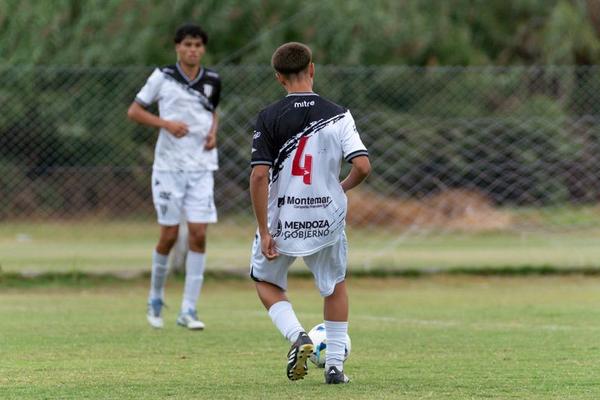
The 4-2-3-1 soccer formation solves a familiar tactical problem: how can a team commit players forward while keeping the center protected? Two deeper midfielders support the defense, three attackers operate behind one striker, and the resulting structure can adjust to possession, pressing and counterattacks. Its strength is not a rigid diagram. It is the way those players move together as the ball changes hands.
What the 4-2-3-1 Soccer Formation Looks Like
The formation has four defenders, two central midfielders, three attacking midfielders and one center forward. The goalkeeper is not counted in those numbers. The two deeper midfielders form a double pivot, while the middle player of the attacking three usually performs the number 10 role.
This starting soccer formation shape changes throughout a match. Fullbacks can overlap, wingers can move inside, and the number 10 can drop toward midfield. Players need clear responsibilities, but they should not remain locked in their original positions when new spaces appear.
The Double Pivot: Protection and Progression
The two holding midfielders connect the back four to the attacking players. Without possession, they screen passing lanes into dangerous central spaces, pick up runners and help teammates defend second balls. With possession, they give defenders safe passing options and move the ball into more advanced areas.
Their jobs need not be identical. A composed passer can sit slightly deeper while a more mobile partner steps forward to support attacks or apply pressure. If one advances, the other generally stays positioned to slow a counterattack. When both drift forward simultaneously, the defense becomes vulnerable to a direct pass through midfield.
Good spacing is essential. The pivots should offer different angles rather than standing flat behind opponents. One may receive near the center backs while the other positions higher to receive the next pass. Our guide to the double pivot in soccer explores this partnership in more detail.
How Attacks Develop in a 4-2-3-1
The Number 10 Finds Space Between Lines
The number 10 often receives between the opponent’s midfield and defensive lines. From there, they can turn, combine with the striker or pass into a runner’s path. A successful number 10 does not simply wait for the ball; they adjust their position to stay visible to teammates and difficult for opponents to mark.
The striker can pin center backs, run behind them or drop short to exchange passes. When a defender follows the striker, space may open for the number 10 or an inward-moving winger. This interplay creates central opportunities without requiring every attack to pass directly through the middle.
Wingers and Fullbacks Create Width
A winger who moves inside can free space for an overlapping fullback. If the winger stays wide, the fullback may instead support from behind or move into an inside channel. The important detail is that two players should not repeatedly occupy the same space while leaving another area empty.
Switching the ball quickly can expose the far side when opponents crowd one flank. Meanwhile, the winger away from the ball can attack the back post. Not every fullback needs to advance: keeping one deeper can provide insurance against a counterattack.
Defending, Pressing and Changing Shape
Without the ball, a 4-2-3-1 often becomes a 4-4-1-1 or a 4-4-2-like shape. Wide attackers retreat toward the two holding midfielders, and the number 10 defends near or just behind the striker. These movements help close passing lanes through the center.
In a high press, the striker may pressure a center back while angling their run to block a central pass. The number 10 covers an opposing midfielder, and a winger presses when the ball goes toward the fullback. Pressing one at a time is risky because opponents can pass around the isolated player. See our guide to pressing triggers in soccer for the timing behind coordinated pressure.
When a team defends deeper, the double pivot stays close enough to the back four to protect the space in front of the center backs. Wingers must recover to prevent opposing fullbacks from creating easy two-against-one situations on the outside.
Why Transitions Matter More Than the Diagram
Imagine the right winger cutting inside as the right fullback overlaps. The number 10 moves toward the ball, but a short pass is intercepted. Suddenly the space behind the attacking fullback is exposed. The nearest pivot must delay the counter, the right center back may shift across, and the winger must sprint back to help.
That preparation is part of rest defense: keeping enough players in useful protective positions even while attacking. It explains why 4-2-3-1 tactics depend on decisions made before possession is lost, not just reactions afterward.
Winning the ball creates a different choice. If the number 10 has space and the striker runs behind, a quick forward pass can exploit an unsettled defense. If opponents have already recovered, circulating possession through the pivots may be safer than forcing an unlikely through ball.
Weaknesses and Ways to Adjust
The lone striker can become isolated when supporting attackers remain too deep. An opponent with three central midfielders may outnumber the double pivot, especially when the number 10 stays high. Teams that send both fullbacks forward can also leave large channels open for counterattacks.
Solutions depend on the problem. Move the number 10 closer to the striker, ask a winger to run beyond the defensive line, or advance only one fullback at a time. Against a crowded midfield, the number 10 can drop to provide an additional central passing option. Comparing the 4-3-3 and 4-2-3-1 formations helps explain these midfield trade-offs.
One useful training exercise is to ask two center backs and two pivots to play through three pressing opponents toward a number 10. Stop whenever both pivots stand in the same passing lane. Reposition them at different depths, restart, and observe how a simple change creates another route forward.
Frequently Asked Questions
Is the 4-2-3-1 more attacking or defensive?
It can support either approach. Its double pivot offers central protection, while the number 10 and wide attackers create chances. Fullback positioning, pressing and player instructions determine the overall balance.
What is the biggest advantage of the 4-2-3-1?
It combines two deeper midfielders with a dedicated creator behind the striker. That gives teams options for building attacks and defending the center during transitions.
Can the formation turn into a 4-4-2?
Yes. When the wingers drop into midfield and the number 10 moves alongside the striker, the team can defend in a 4-4-2-like shape.
Does the number 10 have to be a traditional playmaker?
No. Some number 10s specialize in passing, while others contribute through dribbling, pressing or forward runs. Their shared purpose is to link midfield and attack.
How to Recognize a Well-Organized 4-2-3-1
Watch the relationships, not just the lineup graphic. One pivot protects when the other advances; the number 10 finds pockets of space; wingers and fullbacks coordinate their width. When those movements remain connected during attacks, defensive phases and turnovers, the formation delivers the balance it promises.