

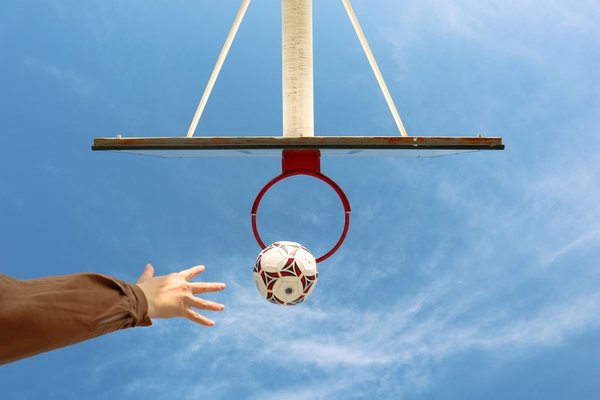
A throw-in looks simple: pick up the ball, put it back into play, and keep the game moving. Yet it is one of the easiest restarts for new players and fans to misunderstand. A legal throw-in depends on where the ball went out, where the player stands, how the ball is delivered, and what happens immediately afterward. Under the current IFAB Laws of the Game, a throw-in is awarded to the opponents of the player who last touched the ball before the whole ball crossed the touchline.
When Is a Throw-In Awarded?
A throw-in is used when the whole ball passes completely over either touchline, on the ground or in the air. If any part of the ball is still above or touching the line, it remains in play. The team that did not touch the ball last receives the throw-in, which should be taken from the point where the ball left the field.
The 2026/27 Laws also allow a throw-in to be awarded to the opposing team when a referee penalizes deliberate delay. This does not mean every throw-in automatically has a five-second limit. The referee first identifies unfair delay, whistles and signals the countdown, then visually counts five seconds. If the restart is still not taken when the count ends, the throw-in switches to the other team.
The Correct Throw-In Technique
The throw-in rules soccer players must follow are specific but easy to remember. At the moment the ball is delivered, the thrower must face the field of play. Part of each foot must be on the touchline or on the ground outside it. The ball must be thrown with both hands from behind and over the head, from the point where it left the field.
Both feet may be on the line, both may be outside the field, or each foot may be positioned differently as long as part of each foot satisfies the rule. A player cannot have one foot completely inside the field with no part of that foot touching the line. Jumping so that both feet leave the ground at the moment of release also fails the required foot position.
A Practical Way to Check Your Technique
Imagine a right back taking a throw near midfield. They can take a short run-up, stop with both feet legally placed on or behind the touchline, bring the ball behind the head with both hands, and release it over the head while facing the field. The run-up itself is not the issue; the referee judges the position and delivery at the moment the ball is thrown.
For players learning the correct throw-in technique, a useful practice habit is to freeze briefly after release. Check that both feet stayed down in a legal position and that both hands remained on the ball through the overhead motion. This makes it easier to spot why a foul throw may be called.
What Counts as a Foul Throw?
A foul throw usually means the required procedure was not followed. Common examples include lifting a foot completely off the ground during delivery, stepping fully onto the field with one foot, failing to use both hands, releasing from the side rather than from behind and over the head, or taking the restart from the wrong place.
If the throw-in is not taken correctly, the restart is awarded to the opposing team from the same position. A technical mistake can therefore surrender possession immediately even when no opponent has challenged for the ball.
When Does the Ball Become Live?
The ball is in play when it enters the field. If it touches the ground before entering, the throw-in is retaken by the same team from the same position. Once the ball has entered, the thrower cannot touch it again until another player has touched it. A second touch normally results in an indirect free kick, unless the second touch is a handball offence requiring a different restart.
Opponents must stay at least 2 meters, or 2 yards, from the point on the touchline where the throw-in is taken. A player who unfairly distracts or impedes the thrower, including by moving too close, can be cautioned for unsporting behavior.
Can You Score Directly From a Throw-In?
No. A goal cannot be scored directly from a throw-in. If the ball goes straight into the opponents’ goal without touching another player, a goal kick is awarded. If it goes directly into the thrower’s own goal, the opposing team receives a corner kick.
There is another useful rule new fans often miss: a player cannot be penalized for offside when receiving the ball directly from a throw-in. That makes long throws tactically useful near the penalty area. Normal offside considerations can apply later in the same phase after the ball has been touched or played by another teammate.
Special Situations After the Restart
A goalkeeper may receive a teammate’s throw-in with the feet, chest, or head, but cannot handle the ball inside the penalty area directly from a teammate’s throw-in. If the goalkeeper does so, the opposing team receives an indirect free kick.
The thrower may deliberately throw the ball at an opponent in order to play it again, provided the throw is taken correctly and the action is not careless, reckless, or excessively forceful. If the ball legally rebounds from the opponent, the original thrower may then play it because another player has touched it.
Useful related internal-link topics include free kick rules explained, offside rules for beginners, and corner kick rules. Together, these guides can help readers understand how each restart of play works and why the referee chooses one restart rather than another.
Frequently Asked Questions
Do both feet have to stay behind the touchline?
No. Part of each foot may be on the touchline or on the ground outside it. A foot can touch the line, but a player cannot have a foot completely inside the field at the moment of delivery.
Can a player take a running throw-in?
Yes. A run-up is allowed as long as the player meets the legal foot-position and throwing requirements when the ball is released.
Does every throw-in now have a five-second limit?
No. Under the 2026/27 law change, the five-second visual countdown is used when the referee judges that a team is deliberately delaying the throw-in. If the countdown expires, the throw-in is awarded to the opposing team.
Can a player be offside directly from a throw-in?
No. There is no offside offence when a player receives the ball directly from a throw-in. Normal offside considerations can apply later once the ball is touched or played by another teammate.
Remember the Four Key Points
For a legal throw-in, remember four things: the correct spot, both feet legally positioned, both hands on the ball, and a delivery from behind and over the head while facing the field. Once the ball enters the field, normal play resumes, except that the thrower cannot touch it again until someone else does. Those basics explain most throw-in decisions and make foul throws much easier to recognize.