

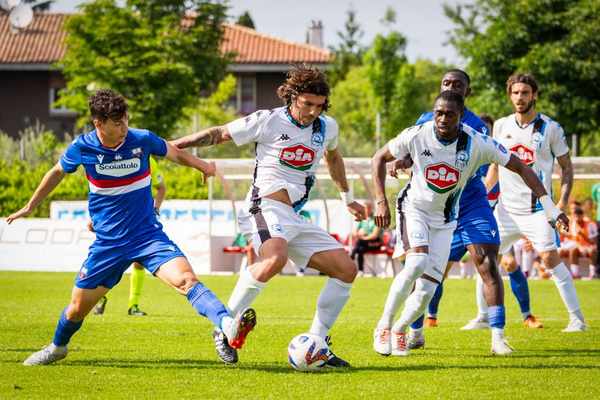
Patient possession asks defenders to keep shifting until a gap appears. Counterattacking soccer tactics pose a different question: where is the gap before defenders have time to shift at all? The moment a team wins the ball, opponents may be spread across the field, facing the wrong direction or sending players forward. A quick, well-supported attack can turn that temporary disorder into a chance.
Successful counterattacking is not simply kicking the ball long and hoping a fast striker catches it. It combines recognition, passing angles, forward runs and a clear decision about whether to accelerate or keep possession. The best teams prepare for those choices even while defending.
What makes a soccer counterattack different?
A soccer counterattack begins with a change of possession and aims to exploit the opponent before its defensive shape is restored. That unsettled period is the attacking transition. Once defenders recover their positions and the attacking side circulates the ball against an organized block, the move has largely become a settled attack.
The location of the recovery matters. Winning possession near the opposition penalty area can create an immediate shooting opportunity. Recovering deep offers more room to run into but usually requires a longer first pass or carry. Neither starting point guarantees an advantage: the key is what the opponent has left exposed.
The first three decisions after winning the ball
Secure the recovery
The ball winner must first control possession. A rushed clearance under pressure is rarely the same as a planned counterattack. A defender who intercepts a pass can sometimes play forward immediately; a midfielder surrounded by opponents may need one short release pass to a teammate facing upfield.
Scan forward before playing sideways
As the ball is recovered, teammates should identify the nearest forward option, the space behind advancing full-backs and the opponent’s central cover. A pass between lines can be more dangerous than a hopeful ball over the top because the receiver can turn and choose the next action.
Commit only when the advantage is real
If attackers have a favorable matchup, the pass or dribble should come quickly. If three defenders are already goal-side against two runners, preserving possession may be smarter. Good attacking transitions depend on this judgment: go for goal when the defense is vulnerable; keep the ball when it is not.
Spacing and runs that turn a break into a chance
Stretch the defense across different lanes
When everyone sprints through the middle, a retreating center-back can defend several passing options at once. One runner can occupy the central lane while another attacks a channel to the left or right. This forces defenders to decide whether to protect the ball, track the runner or cover the passing lane.
Time the run to the passer
Speed matters, but timing matters more. A forward who races beyond the back line before the passer lifts their head may run offside or arrive too early. A curved run across a defender’s blind side can create separation while helping the attacker stay onside at the instant the pass is played. These movements build on the wider principles of off-ball runs in soccer.
Choose the pass that changes the defender’s decision
A vertical pass can eliminate pressure, a diagonal pass can release a winger behind a full-back, and a short layoff can free the third runner. The best option is not always the longest. In fast break soccer, each pass should either advance into useful space or improve the next player’s ability to attack it.
A practical example: breaking from a mid-block
Imagine a team defending in a compact 4-4-2. The opponent’s left full-back pushes high, and a central midfielder attempts a pass into the crowded middle. One of the defending central midfielders intercepts it. The recovering side now has a brief chance to attack the area behind that advanced full-back.
Instead of forcing a long ball from a closed body position, the interceptor passes five yards to a teammate facing forward. The right midfielder immediately runs into the open channel, while one striker occupies a center-back and the other offers a short central passing option. A diagonal ball reaches the wide runner, who drives toward the penalty area.
From there, a low pass toward the arriving striker or a cutback to the supporting midfielder may be better than shooting from a narrow angle. The important sequence is recovery, release, coordinated run and decision at the finish. Coaches can rehearse it with three attackers facing two retreating defenders, then add recovering players to make the timing realistic.
How defensive shape creates attacking opportunities
Counterattacks start before possession changes. A compact mid-block may invite opponents to advance their outside defenders, creating space behind them. A higher press can win the ball closer to goal, shortening the route to a chance. Each approach creates different transition opportunities and carries different risks.
A team also needs protection if the break fails. One holding midfielder and the remaining defenders may stay positioned to prevent a counterattack against the counterattack. This balance, often called rest defense, is as relevant to a direct team as it is to a possession-heavy side. It connects directly to pressing triggers and defensive transition positioning.
Common counterattacking mistakes
One mistake is confusing urgency with hurried technique. Players run ahead before the ball winner has secured possession, leaving no nearby outlet. Another is bunching around the same passing lane, which makes defenders’ decisions easier. Teams also lose promising breaks by taking too many touches when an early pass would release a runner, or by forcing the final ball after the opponent has recovered.
Frequently asked questions
What are counterattacking soccer tactics?
They are coordinated actions used immediately after regaining possession to exploit opponents before they can reorganize defensively. They rely on quick decisions, forward options, movement into space and appropriate passing choices.
Is counterattacking the same as playing long balls?
No. A counterattack may use a long pass, short combination or dribble. What defines it is the attempt to exploit the transition, not the distance the ball travels.
Which formation is best for counterattacking?
There is no universally best formation. A 4-4-2, 4-2-3-1 or 4-3-3 can all support effective breaks when players understand where to recover the ball, who runs forward and who protects against another turnover.
When should a team abandon a counterattack?
When the forward route closes, support is too far away or defenders have regained numerical and positional control. Recycling possession can preserve the ball and create a better attacking opportunity.
Turning recoveries into intelligent attacks
Counterattacking offers a genuine alternative to slowly probing an organized defense, but it is not an alternative to thinking. The most effective teams recognize the right recovery, release the ball to a player who can see forward, spread their runs and finish before the opening disappears. Just as importantly, they know when the opening has closed. That blend of speed and judgment makes a counterattack a tactical weapon rather than a gamble.