

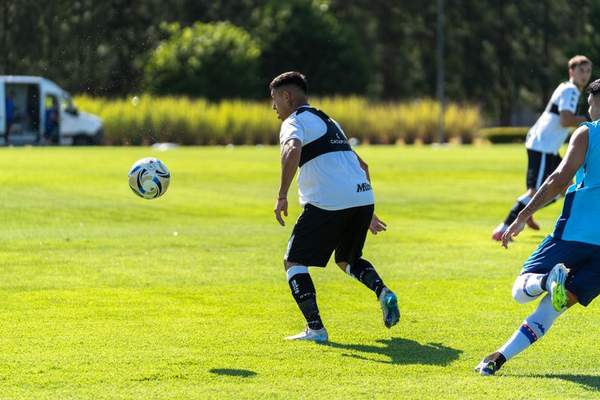
A low block can look passive from the stands, but a well-organized one demands constant decisions. Defenders judge when to hold position, midfielders close passing lanes, and forwards prepare to turn a clearance into an attack. Low block soccer tactics trade territory for protection of the spaces closest to goal. The challenge is absorbing pressure without becoming trapped inside the penalty area.
Build a Shape That Protects Central Space
In a low block defense, most outfield players retreat into their defensive third. A 4-4-2, 4-5-1, or 5-4-1 can all work. The formation matters less than how closely players support one another and which passes they prevent.
A deep defensive shape must stay compact vertically and horizontally. Midfielders position themselves close enough to defenders to restrict space between the lines. Wide midfielders move inward when the ball is central, guarding channels between full-backs and center-backs. When the ball moves, the whole unit shifts.
Compact soccer defense is not simply crowding the box. If the defensive line drops while midfield stays high, opponents can receive and turn in the gap. Short, connected distances make forward passes harder and help nearby players support whoever challenges the ball.
Responsibilities Across the Lines
Forwards screen central passing options and provide an outlet for counters. Midfielders protect pockets of space and track late runners. Defenders guard the goal, manage opponents’ movements, and organize cover. The goalkeeper communicates during crosses and prepares for rebounds. Compare this approach with a mid-block defensive system, where engagement typically begins farther from goal.
Why Patience Matters More Than Possession
Opponents might pass sideways for a minute without creating danger. That does not mean the defense has failed. A slow pass near halfway is generally less threatening than a forward pass into the penalty area. The defending team should respond to the ball carrier’s options, not merely the amount of possession conceded.
Chasing every pass creates openings. If a midfielder steps out alone, an attacker may receive behind them. Disciplined teams stay connected, communicate, and wait until the situation favors pressure.
Recognize the Right Pressing Triggers
A heavy touch, backward pass, ball played toward the touchline, or receiver facing their own goal may offer a chance to press. The nearest player applies pressure while teammates cover central passes and nearby runners. If the opponent faces forward with time, keeping the block intact may be safer than rushing toward the ball.
Good pressure is coordinated. One player sprinting out is rarely enough; teammates must adjust their positions behind the challenge.
Force Attacks Wide Without Giving Away Easy Crosses
Protecting the center often pushes the opposition toward the wings. That can slow attacks and give defenders time to recover. Still, deliberately allowing wide possession does not mean accepting uncontested deliveries into the box.
A wide midfielder should recover to support the full-back. The full-back tries to slow the carrier and narrow their crossing angle. Center-backs monitor runners rather than watching only the ball, while far-side defenders tuck in to protect the goalmouth. This requires constant communication as players exchange positions.
Protect Against Cutbacks and Second Balls
A floated cross is not the same threat as a low cutback from the byline. Cutbacks often find arriving attackers while defenders face their own goal. One recovering midfielder should protect the area around the penalty spot and edge of the box instead of chasing the ball toward the corner.
After a clearance, teammates should step out together when safe. Staying pinned to the six-yard box invites another attack and leaves little chance of competing for the second ball.
Prepare the Counterattack Before the Ball Is Won
A low block becomes more threatening when opponents fear losing possession. The counterattack setup begins before the interception: forwards identify open channels, and wide players anticipate where space will appear when opposing full-backs advance.
The first pass matters. If a runner is free, moving forward quickly can exploit disorganized opponents. If passing lanes are blocked, keeping possession for several seconds may be wiser than launching a hopeful clearance. Counterattacking does not mean forcing every regain into an immediate sprint.
How One Defensive Sequence Creates a Chance
Imagine a 4-4-2 protecting a narrow lead. An opponent passes to the right-back. Your left midfielder presses from inside to outside, discouraging a pass into the half-space, while your left-back stays connected to the center-back. The rest of midfield slides across. When a low cross arrives, your center-back intercepts it.
Instead of kicking the ball away, the defender finds a striker who lays it off to a midfielder facing forward. Meanwhile, the far-side winger runs into space behind the advanced left-back. The move becomes a counterattack because teammates anticipated the regain, not because the initial clearance was unusually long.
Where Low Blocks Become Vulnerable
Quick switches can stretch a defense before the far side recovers. Attackers moving between the lines can tempt center-backs out of position. Cutbacks, rebounds, and set pieces punish teams that defend too deeply or fail to challenge loose balls.
There is also a physical cost. Long periods without the ball demand repeated tracking runs and concentration. Teams need occasional controlled possession to move upfield, recover their shape, and prevent wave after wave of pressure.
Coaching the Shape and the Transition
Try an eight-versus-six exercise near the penalty area, with a goalkeeper supporting the six defenders. Place defenders in two close lines and ask attackers to create chances through central combinations or wide deliveries. Give the defenders counterattacking targets near halfway and reward regains followed by controlled forward passes.
Freeze play whenever someone presses alone. Ask which passing lane opened and who should have provided cover. Then allow attackers to switch sides more frequently, testing whether the block shifts together. A 4-4-2 defensive shape is useful for this practice, but adjust roles to your squad’s strengths.
Frequently Asked Questions
What is the main aim of a low block in soccer?
To protect dangerous central areas and limit clear chances, even when the opposition controls more territory and possession.
Is a low block the same as parking the bus?
Not exactly. Parking the bus informally describes very defensive play. An organized low block includes coordinated pressure, recovery movements, and a plan for regaining possession.
Which formation suits low block soccer tactics best?
There is no universal answer. A 4-4-2 offers two forward outlets, a 4-5-1 adds midfield coverage, and a 5-4-1 provides an extra central defender. Execution matters more than the label.
Can a team counterattack without especially fast strikers?
Yes. Accurate first passes, supporting runs, and coordinated combinations can create openings. Sometimes simply retaining the ball is the best way to relieve pressure.
Defend with Purpose, Then Break Forward
The best low blocks are selective rather than fearful. They allow harmless passes, protect central routes, contest deliveries, and recognize when to attack. When the team understands both its defensive responsibilities and its first actions after a regain, patience becomes a deliberate strategy.