

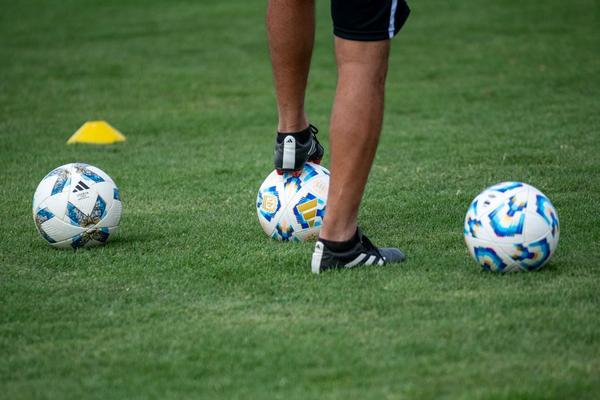
Keeping the ball is rarely just about passing accuracy. Under pressure, a player needs to know where the nearest defender is, which teammate can receive safely, and whether to move the ball forward or start again. Effective soccer possession drills turn those decisions into habits by giving players realistic problems to solve.
The following practices build from tight keep-away games to directional play. They work best when coaches reward scanning, useful movement, and sensible choices rather than counting passes for their own sake.
Build better passing options before adding pressure
A teammate cannot support the ball carrier by standing behind a defender. Good support means moving into a visible passing lane at a useful distance. One player might offer a short pass behind the ball while another moves diagonally into space. Together, they give the receiver choices.
Encourage players to look over a shoulder as the ball travels and receive with an open body shape when possible. Scanning helps them notice pressure early; a controlled first touch then helps them act on that information. These principles make passing and receiving drills much more valuable when opponents are introduced.
Five soccer possession drills for quicker decisions
1. Four-versus-two rondo for awareness
Mark a square about 10 by 10 yards, adjusting the size for your team. Place four attackers around the outside and two defenders inside. The attackers keep possession while defenders try to intercept or force an error. Rotate roles after a successful interception or a short timed round.
Ask each attacker to check the defenders’ positions before receiving. After passing, players should shift to reopen their passing lane instead of watching the ball. Begin with unlimited touches. Introduce a two-touch challenge only when the group can already pass and support consistently.
If defenders win the ball almost every time, enlarge the square. The goal is repeated successful decisions under manageable pressure, not a sequence of rushed turnovers.
2. Three-versus-three plus two neutrals for support angles
Set out a 20-by-15-yard rectangle. Play three against three, with two neutral players always helping whichever team has possession. Award a point for six completed passes, then restart the count when the ball changes hands.
The extra players create a spare option, but attackers still have to find it. Encourage teammates to occupy different lines rather than gathering around the ball. The receiver might play into a neutral player, turn away from pressure, or use a teammate behind them to switch direction.
Progress the game by asking the team to transfer the ball from one side of the area to the other before scoring. Rotate neutrals frequently. This is an effective choice among support angle drills because every player must learn to create and use space.
3. Four-corner keep-away for switching play
Make a 25-by-20-yard area and mark small support zones near its corners. Play four against four in the middle, with two corner players supporting the team in possession. Score by using one supporting corner and then connecting to the opposite corner without losing the ball.
Players soon discover that forcing passes through a crowded side is usually less effective than recycling the ball. When a defender blocks the forward lane, a backward pass can create the time and angle needed to switch across the field.
Coach the player who has just passed to move again. The best passing lane often appears only after a teammate changes position. Rotate corner roles so everyone experiences building an attack from different starting points.
4. Three-zone possession game for purposeful progress
Divide a 36-by-24-yard pitch into three horizontal zones. Play five against five, allowing everyone to move between zones. Place a small goal at each end. Teams aim to keep the ball and find a controlled reception in the middle zone before creating a scoring chance.
Picture a right-sided player receiving near the touchline while a defender closes quickly. A risky pass down that line may lose possession. Instead, the player finds a supporting midfielder, who opens their body and transfers the ball to the left. The team has escaped pressure and can advance.
Avoid making players complete a fixed number of passes before attacking. They should recognize a genuine forward opening and use it. This makes the exercise more realistic than possession games where keeping the ball has no direction or purpose.
5. Transition possession for the first seconds after a turnover
Play four versus four inside a 24-by-20-yard grid, assisted by two neutral players. A team scores a point for five completed passes. When defenders win the ball, they immediately become attackers and use the neutrals to establish possession.
Observe what happens straight after the turnover. Does the new ball carrier have a safe outlet? Are teammates widening the field or standing close together? Encourage one nearby player to offer a short option while others create depth and width.
These ball retention drills teach players that possession begins the moment their team wins the ball, not only once everyone has settled into position.
Make the decisions visible to players
When coaching keep away soccer drills, resist calling out every pass. Brief questions during natural breaks often work better: What did you see before receiving? Where was the spare player? Could a supporting run have opened another route?
Look for two usable passing options, movement after the pass, and the confidence to recycle possession when the forward route is blocked. A shorter sequence completed against genuine pressure can reveal more progress than twenty comfortable passes without defenders.
Related first-touch drills and pressing drills can improve both sides of the practice: attackers learn to receive more securely while defenders learn to apply realistic, controlled pressure.
Put the drills into a 25-minute session
Begin with four minutes of moving, scanning, and short passing. Use six minutes for the rondo and seven for the neutral-player possession game. Finish with eight minutes of the three-zone game, keeping interruptions brief so players can apply their decisions in a match-like setting.
Frequently asked questions
What are the best soccer possession drills for beginners?
Start with a spacious four-versus-two rondo or another game with more attackers than defenders. Allow enough touches for control, scanning, and passing before adding tighter restrictions.
How do possession drills improve decision-making?
Players face changing pressure and must repeatedly decide whether to pass, protect, turn, or move into support. This trains adaptable choices rather than rehearsed passing patterns.
Should a possession exercise require one-touch passing?
Not by default. One-touch play can be helpful when the next pass is already clear, but forcing it may encourage hurried mistakes. Use touch limits as a progression, not the starting rule.
How often should a team work on possession?
Short possession activities can feature regularly in warm-ups and small-sided games. Consistent repetition, appropriate pressure, and useful feedback matter more than one unusually long session.
Turn training possession into match confidence
Successful soccer possession drills help players look earlier, support each other at better angles, and recognize when patience creates a better attacking opportunity. When those habits transfer into real games, keeping the ball becomes a collective skill rather than the responsibility of the player currently in possession.