

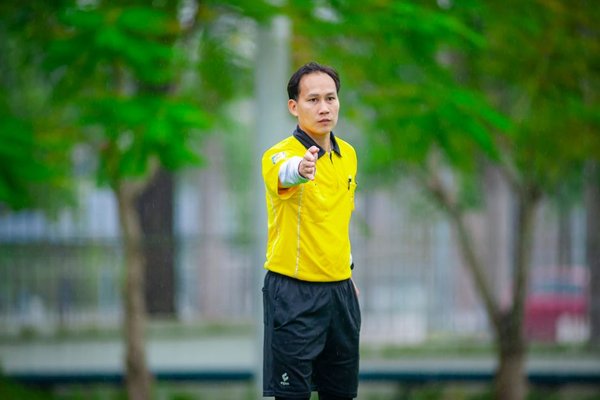
Soccer moves quickly, and a referee often has only seconds to communicate a decision to players, benches, match officials, and everyone watching. That is why referee gestures are simple, visible, and consistent. Once you know the basic shapes, you can usually understand a call before the commentator explains it.
This guide covers the referee hand signals soccer viewers see most often. It also clears up a common misunderstanding: some decisions, especially offside, are first signalled by an assistant referee with a flag. The referee then confirms the decision and indicates the restart.
Why Soccer Referees Use Hand Signals
Referees communicate with a whistle, voice, body position, cards, and hand or arm movements. The whistle gets attention; the gesture explains what happens next. A signal may identify the direction of a restart, show that play should continue, or communicate disciplinary action.
Approved referee signals form part of Law 5 of the Laws of the Game. They are especially useful when crowd noise, camera angles, or language differences make spoken communication difficult.
The Most Common Soccer Referee Signals
Direct Free Kick
For a direct free kick, the referee indicates the direction in which the team taking the kick will attack. The important word is direct: the kicker may score directly into the opponents’ goal without another player touching the ball. This free kick signal commonly follows offences such as tripping, pushing, holding, or certain handball offences.
Indirect Free Kick
The indirect free kick has one of the easiest signals to recognise. The referee raises one arm above the head and keeps it raised until the kick has been taken and the ball touches another player, goes out of play, or it is clear that a goal cannot be scored directly. If the ball goes straight into the opponents’ goal without another touch, a goal is not awarded.
This raised-arm signal is often seen after offside decisions, dangerous play without contact, or some goalkeeper-related offences.
Advantage Signal
The advantage signal means the referee has seen an offence but is allowing play to continue because stopping the match would disadvantage the team that was fouled. The referee extends the arms forward while allowing play to continue. If the expected advantage does not develop within a few seconds, the referee can return to the original offence.
For example, an attacker may be clipped near midfield but stay on their feet and release a teammate into open space. Instead of stopping a promising attack for a free kick, the referee can play advantage. The gesture effectively tells everyone, “I saw the offence; keep playing.”
Penalty Kick
When a direct-free-kick offence is committed by a defender inside their own penalty area, the referee may award a penalty kick. The familiar referee gesture is a clear point toward the penalty mark. The referee then manages player positions and signals when the kick may be taken.
Corner Kick
For a corner kick, the referee points toward the appropriate corner area. In the usual situation, this means the defending team touched the ball last before the whole ball crossed the goal line and no goal was scored. The assistant referee may also help with the decision depending on positioning.
Goal Kick
For a goal kick, the referee indicates toward the goal area. This usually means the attacking team touched the ball last before it crossed the defending team’s goal line and no goal was scored. Under the 2026/27 Laws, a visible raised-hand five-second countdown may also be used in situations covered by the rules on deliberate delay at a goal kick.
Throw-In Direction
When the ball crosses a touchline, the referee or assistant referee indicates which team has the throw-in by showing the direction of attack. At higher levels, the assistant referee often makes this signal with the flag while the referee confirms the decision.
Yellow Card
A yellow card is the formal signal for a caution. The referee holds it clearly above the head so the player and other match officials can see it. Reasons can include reckless challenges, dissent, delaying a restart, persistent offences, or other unsporting behaviour. Two cautions to the same player in one match result in a sending-off.
Red Card
A red card means the player or other eligible participant is sent off. The referee holds the red card above the head. Serious foul play, violent conduct, certain denial-of-goal-scoring-opportunity offences, offensive or abusive conduct, and a second caution are among the situations that can lead to a red card.
VAR TV Signal
In matches using video assistant referees, the referee draws the outline of a rectangle in the air with the hands to show the TV signal. It indicates that the VAR review process is being used or that the referee is communicating the outcome of a review. It does not automatically mean the original decision will change.
Signals Fans Often Confuse
Offside causes frequent confusion because the assistant referee normally raises the flag first. The centre referee then stops play and, because offside is restarted with an indirect free kick, raises an arm overhead. A referee pointing in a direction can also represent different restarts, so the raised arm is the clearest way to distinguish an indirect free kick from a direct one.
A useful viewing tip is to watch the referee immediately after the whistle. The first gesture usually communicates the restart; cards and player-management gestures often follow. Learning that sequence makes referee gestures much easier to read from the stands or on television.
Natural internal-link topics for readers who want more detail include soccer offside rule explained, direct vs indirect free kicks, and how VAR decisions work.
Frequently Asked Questions
What does it mean when a soccer referee raises one arm straight up?
It signals an indirect free kick. The referee keeps the arm raised until the ball has touched another player, goes out of play, or it is clear that a direct goal cannot be scored.
What is the referee’s signal for advantage?
The referee extends the arms forward and lets play continue when the team that suffered the offence is better served by continuing the attack than by stopping immediately for the restart.
Why does the referee draw a rectangle with the hands?
That is the TV signal used in matches with VAR. It shows that a video review procedure is involved and is followed by the referee’s final decision.
Does the referee signal offside with a hand?
Usually, the assistant referee first signals offside with the flag. Once the referee accepts the decision and stops play, the restart is an indirect free kick, shown with one arm raised above the head.
Reading Referee Gestures With Confidence
You do not need to memorise every detail of the Laws to follow the referee. Start with the signals that immediately explain the restart: direction for a direct free kick or throw-in, arm overhead for an indirect free kick, point to the penalty mark for a penalty, and arms forward for advantage. Add yellow and red cards, corner and goal-kick gestures, and the VAR rectangle, and most major decisions become easy to recognise at a glance.