

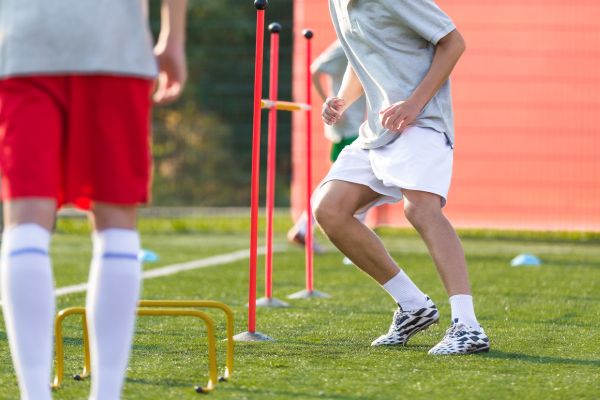
Speed in soccer is not just about running fast in a straight line. Anyone can sprint across an empty field, but soccer is rarely that simple. The game asks players to accelerate, stop, turn, react, recover, and then do it all again while controlling the ball or reading an opponent’s movement. That is why soccer speed training drills matter so much. They help players build the kind of quickness that actually shows up during a match.
A fast player can change the rhythm of a game in seconds. A winger gets half a yard of space and suddenly the defense is stretched. A defender reacts early and cuts off a dangerous pass before it becomes a chance. A midfielder bursts away from pressure and opens the field. These moments do not happen by accident. They come from training the body to move sharply, efficiently, and with purpose.
Why Soccer Speed Is Different From Track Speed
Track speed is clean and measured. Soccer speed is messy. Players do not always know where they are running until the play develops. They may sprint five yards, check their shoulder, slow down, turn, and then explode in the opposite direction. The ball, the opponent, and the space all affect the movement.
This is why traditional sprinting is only one part of soccer speed development. A player still needs strong acceleration, but they also need balance, body control, foot speed, reaction time, and decision-making. The best soccer speed training drills combine physical movement with game-like situations. They do not just make players faster; they make them faster at the right time.
A player who can reach top speed quickly has a clear advantage. Most soccer sprints are short, often between five and twenty yards. That first burst matters more than a long-distance sprint. Getting away from a marker or closing down an attacker usually depends on the first three steps.
Building a Strong Speed Foundation
Before adding advanced drills, players need a foundation. Speed depends on posture, coordination, strength, and rhythm. If a player runs with poor mechanics, they may waste energy or move slower than they should. Small details can make a big difference.
Good sprint posture starts with a slight forward lean during acceleration. The arms should drive naturally, not swing across the body. Knees should lift with control, and each foot strike should be quick and powerful. Players do not need to look like professional sprinters, but they should learn how to move without unnecessary tension.
Warm-ups also matter. Cold muscles do not produce sharp movement. A proper speed session should begin with light jogging, mobility work, skips, high knees, short accelerations, and dynamic stretches. The goal is to wake up the nervous system, not tire the body before the real work begins.
Short Acceleration Drills for Explosive Starts
Acceleration is one of the most valuable parts of soccer speed. The ability to explode from a standing or jogging position can separate a player from a defender. Short acceleration drills teach the body to produce force quickly.
A simple drill begins with players standing on the goal line or touchline. On a signal, they sprint five to ten yards as fast as possible, then walk back and recover. The distance is short, but the effort should be maximum. Quality is more important than quantity here. If the player starts to slow down or lose form, the drill has already done its job.
Another useful variation is the falling start. The player stands tall, leans forward until they almost feel off balance, then drives into a sprint. This teaches the body to attack the ground and move forward aggressively. It also helps players understand the feeling of proper acceleration angle.
For a more soccer-specific touch, players can begin from different positions. They might start facing backward, sideways, sitting down, or in a defensive stance. Soccer rarely gives perfect starting positions, so training from awkward angles helps build real-match readiness.
Cone Drills for Quick Feet and Direction Changes
Cone drills are common in soccer training, and for good reason. When used properly, they improve foot speed, balance, and the ability to change direction without losing control. The key is to avoid turning them into empty patterns. Players should move with intent, not just shuffle through cones because the coach set them up.
A classic zigzag cone drill works well for this. Set cones several yards apart in a diagonal pattern. The player sprints to the first cone, plants the outside foot, cuts sharply, and moves to the next cone. Each turn should be clean and controlled. The player should stay low, keep the chest slightly forward, and push out of the cut with power.
Another effective drill is the five-yard shuttle. The player starts in the middle, sprints to one cone, turns, sprints ten yards to the opposite cone, then returns to the middle. This drill trains acceleration, deceleration, and re-acceleration. In soccer, slowing down well is just as important as speeding up. A player who cannot brake under control will struggle to defend, press, or change direction quickly.
Cone drills should not be rushed at the cost of technique. Fast but sloppy movement can create bad habits. Sharp movement, clean foot placement, and strong posture are what make these drills useful.
Reaction Drills That Feel Like Real Soccer
Speed becomes more valuable when it is connected to reaction. In a match, players respond to cues: a pass, a loose touch, a teammate’s run, or an opponent’s body shape. Reaction drills train players to move quickly after reading information.
One simple reaction drill uses two colored cones. The player stands ready while a coach calls out a color. The player reacts and sprints toward that cone. It sounds basic, but it trains the mind and body to connect quickly. The drill can become more advanced by adding a ball, a pass, or a defender.
Another version uses hand signals instead of verbal commands. This forces the player to keep their eyes up. Many young players run with their heads down, especially when tired. Reaction training helps them scan the field while staying ready to move.
Partner chase drills are also excellent. One player starts slightly behind another. The front player chooses when to sprint, while the chasing player must react and close the gap. This creates a competitive edge and feels closer to real match pressure. It is especially helpful for defenders, wingers, and forwards who often face one-on-one races.
Ball-Based Speed Drills for Game Control
Speed without the ball is useful, but soccer players must also move quickly with the ball at their feet. Dribbling at speed is different from sprinting freely. The player has to take controlled touches, adjust stride length, and keep the ball close enough to protect it.
A strong ball-speed drill starts with a ten to fifteen-yard dribble sprint. The player pushes the ball forward and runs after it, using longer touches when space is open. At the end, they stop the ball under control or finish with a pass or shot. This teaches players to run fast without losing the ball.
Another useful drill is the speed dribble into a cut. The player dribbles forward at pace, reaches a cone, performs a sharp cut, and accelerates in a new direction. This mimics a winger attacking a defender or a midfielder escaping pressure.
Players should learn the difference between close-control dribbling and open-space dribbling. Close control is useful in traffic, but in open space, taking tiny touches can slow a player down. Good players know when to push the ball ahead and use their natural running speed.
Sprint Recovery and Repeated Speed
Soccer does not ask for one sprint and then a long rest. Players sprint repeatedly throughout a match. That is why repeated speed ability is important. It is the capacity to produce sharp bursts again and again, even when fatigue starts to build.
A simple repeated sprint drill uses six to eight short sprints of ten to twenty yards, with limited recovery between each one. The goal is to maintain speed and form across all repetitions. If the first sprint is fast and the last one is slow and messy, the player needs better conditioning or longer recovery.
Another useful setup is sprint, jog, sprint. The player sprints ten yards, jogs ten yards, then sprints again. This reflects the rhythm of a match, where players often move from light activity into sudden explosive action.
Still, speed training should not become pure endurance training. If every drill leaves the player exhausted, the nervous system cannot produce maximum speed. True speed work needs rest. Some sessions should focus on quality, while others can focus more on repeated efforts.
Agility Drills for Defenders and Attackers
Agility is often described as quick movement, but in soccer it also includes decision-making. A defender needs agility to stay with an attacker. An attacker needs agility to create separation. Both players are trying to control space.
A one-on-one gate drill is excellent for this. Set up two small gates with cones. The attacker tries to dribble through either gate, while the defender reacts and tries to block the path. This drill includes acceleration, change of direction, body feints, and decision-making.
For defenders, lateral shuffle to sprint drills are useful. The player shuffles sideways for a few yards, then opens the hips and sprints forward or backward. This helps with defensive transitions, especially when tracking runners or recovering after being turned.
For attackers, fake-and-go drills can improve explosive separation. The player jogs toward a cone, drops the shoulder, plants one foot, then bursts away in the opposite direction. The movement should feel natural, not theatrical. In real soccer, the best feints are often small and sharp.
How Often Players Should Train Speed
Speed training works best when players are fresh. Two focused sessions per week can be enough for many players, especially during the season. Younger players or beginners may need even less at first. More is not always better. Poor-quality speed work can increase fatigue without improving performance.
A good speed session does not need to be long. Twenty to thirty minutes of focused drills can be very effective if the intensity is high and the rest periods are sensible. Players should leave feeling sharp, not completely drained.
During the season, speed drills can be included after warm-up and before heavy technical or tactical work. This allows players to train explosive movement while their bodies are still fresh. During the off-season, players can spend more time developing sprint mechanics, strength, and repeated speed.
Common Mistakes in Soccer Speed Training
One common mistake is doing too many drills without enough rest. Speed is not the same as fitness. To get faster, players need to move at high quality. If they are tired before every sprint, they are practicing slow movement.
Another mistake is ignoring technique. Some players try to run harder instead of running better. Tight shoulders, poor arm drive, weak posture, and heavy steps can all reduce speed. Coaches and players should pay attention to how movement looks, not just who finishes first.
A third mistake is training without the ball all the time. Sprint drills are valuable, but soccer speed must eventually connect to the game. Players should include ball-based drills, reaction work, and small-sided situations where speed decisions matter.
Turning Speed Into Match Impact
The real goal of soccer speed training drills is not just to win races in practice. It is to make better plays during matches. Speed should help a player press earlier, recover faster, attack space, beat a defender, or arrive first to a loose ball.
A fast player who understands timing becomes difficult to handle. They do not sprint constantly. They wait, read the moment, and then explode. That kind of speed feels controlled, almost calm. It is not frantic running. It is purposeful movement.
Players should also remember that speed improves gradually. A few sessions may make someone feel sharper, but lasting improvement comes from consistency. Good sleep, strength training, mobility, nutrition, and recovery all support speed development. The drills matter, but so does everything around them.
Conclusion
Soccer speed is a blend of power, reaction, control, and confidence. The fastest players are not always the ones with the best straight-line sprint. Often, they are the players who accelerate at the right moment, turn cleanly, recover quickly, and stay balanced under pressure. That is what makes soccer speed training drills so valuable.
By practicing short accelerations, cone movements, reaction drills, ball-speed exercises, and agility work, players can build speed that actually translates to the field. The work does not need to be complicated. It needs to be consistent, focused, and connected to the way soccer is played. Over time, those small improvements show up in real moments: reaching the pass first, escaping a defender, closing down space, or turning a half-chance into something dangerous. That is where speed truly matters.