

Soccer is not a sport played at one steady pace. A player may jog for a few seconds, sprint suddenly into space, slow down to read the field, press an opponent, jump for a header, recover, and then do it all again. That constant change of rhythm is what makes soccer so demanding. It is also why endurance in soccer is different from simply being able to run long distances.
Good conditioning helps players stay sharp from the first whistle to the final minutes. It supports faster recovery between sprints, better movement off the ball, stronger defensive pressure, and cleaner decision-making when fatigue begins to creep in. The best soccer conditioning workouts do not just build general fitness. They prepare the body for the stop-start, high-intensity nature of the game.
A well-conditioned player may not always be the fastest on the field, but they are often the one still making smart runs late in the match. That kind of endurance is built through focused, consistent training.
Why Soccer Endurance Is Different from Regular Running
Traditional distance running can improve basic aerobic fitness, but soccer requires more than a steady jog. During a match, players repeat short bursts of high effort with brief periods of lower-intensity movement. This means the body needs both aerobic endurance and anaerobic power.
Aerobic fitness helps players keep moving for the full match. It supports recovery between intense actions and allows the heart and lungs to work efficiently. Anaerobic conditioning helps with explosive moments such as sprinting, chasing loose balls, changing direction, and pressing aggressively.
This combination is why soccer conditioning should include intervals, shuttle runs, sprint work, agility drills, and ball-based exercises. Running five miles at the same pace may help general stamina, but it will not fully prepare a player for the unpredictable demands of a competitive game.
Building a Strong Aerobic Base
Before jumping into intense sprint sessions, players need a solid fitness foundation. An aerobic base allows the body to recover faster and handle harder workouts without breaking down too quickly. This type of training is especially useful during the early part of a training cycle or preseason.
A simple way to build this base is through moderate runs lasting twenty to forty minutes. The pace should feel controlled, not exhausting. Players should be able to breathe steadily and maintain form without feeling like they are racing. These runs help improve cardiovascular capacity and prepare the body for more demanding conditioning work later.
Small-sided games can also build aerobic endurance in a more soccer-specific way. Playing three-on-three, four-on-four, or five-on-five keeps players moving constantly while still involving passing, positioning, and decision-making. This makes conditioning feel more connected to the actual sport.
Interval Runs for Match Fitness
Interval training is one of the most effective methods for soccer endurance because it mirrors the rhythm of a match. Instead of running at one pace, players alternate between harder efforts and recovery periods.
A basic interval workout might include running hard for thirty seconds, jogging for sixty seconds, and repeating the pattern for several rounds. The hard section should feel challenging but controlled, while the recovery should allow the player to keep moving without fully stopping.
Over time, intervals can become more demanding. Players may increase the number of rounds, shorten the recovery period, or raise the intensity of the work phase. The key is progression. Conditioning improves when the body is challenged gradually, not punished all at once.
Interval runs are useful because they train the body to recover while still moving. In soccer, players rarely get the luxury of standing still for long. They must regain control while staying involved in the game.
Shuttle Runs for Stop-Start Conditioning
Shuttle runs are a classic soccer conditioning tool for good reason. They train acceleration, deceleration, turning, and repeated effort. Unlike straight-line running, shuttles force players to change direction, which is a major part of match movement.
A common shuttle setup uses markers placed five, ten, fifteen, and twenty yards apart. The player runs to the first marker and back, then to the second marker and back, continuing through the longer distances. This creates a demanding workout that builds both endurance and sharp movement.
The quality of movement matters. Players should stay low when changing direction, plant the foot firmly, and push off with control. Sloppy turns can reduce the benefit and increase the risk of strain. It is better to perform fewer high-quality rounds than to drag through too many with poor form.
Shuttle runs also build mental toughness. They are uncomfortable, especially near the end, but they teach players to keep moving through fatigue.
Sprint Repeats for Explosive Endurance
Soccer players need to sprint again and again during a match. A single fast run is useful, but the real test is whether a player can repeat those sprints late in the game. Sprint repeats train that ability.
A simple sprint repeat session may involve sprinting twenty to thirty yards, walking back to the starting point, and repeating for several rounds. The rest period should be long enough to keep the sprints fast, but not so long that the workout loses its conditioning effect.
For more advanced players, repeated sprint workouts can include curved runs, diagonal runs, and sprints after backpedaling or side shuffling. These variations feel more like match situations. A winger might sprint down the line, a defender may recover diagonally, and a midfielder may accelerate after turning away from pressure.
Sprint training should be done with care. Players need a proper warm-up, including dynamic mobility and gradual build-up runs. Sprinting cold is one of the easiest ways to invite injury.
Agility Drills That Support Endurance
Agility is often treated separately from conditioning, but in soccer the two are closely connected. A player who can change direction efficiently wastes less energy. Good movement mechanics help preserve endurance over ninety minutes.
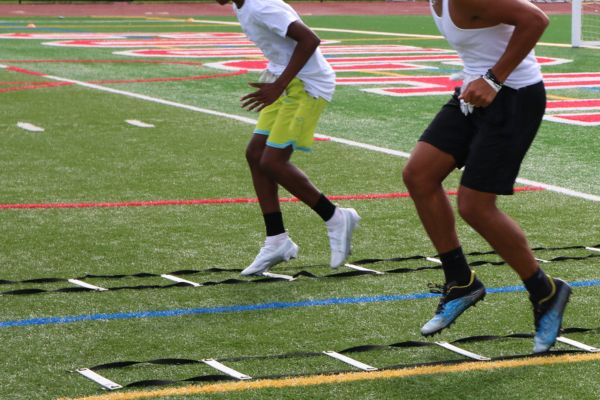
Cone drills, ladder work, lateral shuffles, and reaction drills can all improve agility. However, the goal should not be fancy footwork for its own sake. The drills should train useful patterns: quick cuts, balanced turns, controlled stops, and sharp accelerations.
One effective approach is to combine agility with conditioning. For example, a player might complete a short cone pattern, sprint ten yards, jog back, and repeat. This keeps the heart rate high while reinforcing movement quality.
Agility work also helps players respond better under fatigue. Late in a match, tired legs can make movement heavy and slow. Conditioning that includes changes of direction helps players stay coordinated when the game gets intense.
Ball-Based Conditioning for Real Game Feel
Some of the best soccer conditioning workouts include the ball. This keeps training realistic and improves technical ability while building fitness. Running without the ball has value, but soccer players also need to pass, dribble, receive, and shoot while tired.
Dribbling intervals are a good example. A player can dribble quickly through cones, accelerate into open space, then jog back and repeat. Passing circuits can also be used, especially with partners or small groups. The goal is to keep movement continuous while maintaining clean touches.
Small-sided games are especially powerful for conditioning. They naturally include sprinting, pressing, turning, recovering, and quick decisions. Because the space is smaller, players are involved more often than in a full-field game. This creates intense conditioning without feeling like a basic running session.
Ball-based conditioning also trains concentration. Fatigue often causes poor touches and rushed decisions. Practicing skills under physical stress helps players remain composed during real matches.
Strength Training for Better Conditioning
Endurance is not only about the lungs. Stronger muscles handle repeated movement more efficiently. Strength training can improve sprinting, stability, balance, and injury resistance, all of which support better conditioning on the field.
Lower-body strength is especially important. Squats, lunges, step-ups, hip hinges, calf raises, and glute bridges can build the muscles needed for running and changing direction. Core training also matters because a stable trunk helps players stay balanced during contact, turns, and quick movements.
Strength sessions do not need to be overly complicated. Consistency and good form are more important than heavy weights or advanced exercises. For younger players or beginners, bodyweight training can be enough at first.
A stronger player often looks more energetic because their body uses less effort to perform repeated actions. That efficiency can make a real difference during long matches.
Recovery Runs and Active Rest
Not every conditioning session should be intense. Recovery work helps the body adapt and prevents players from feeling constantly drained. Light jogging, mobility routines, stretching, cycling, or easy ball work can support circulation without adding too much stress.
Recovery runs should feel comfortable. They are not meant to prove fitness. Their purpose is to loosen the body, encourage movement, and help players feel better for the next harder session.
Sleep, hydration, and nutrition also affect conditioning. A player can follow a strong training plan and still feel tired if recovery habits are poor. Endurance improves during the recovery process, not just during the workout itself.
Creating a Balanced Weekly Conditioning Plan
A balanced soccer conditioning plan should include different types of work across the week. Too much sprinting can overload the legs. Too much slow running may not prepare players for match intensity. The best approach combines aerobic work, intervals, sprint training, agility, strength, and recovery.
For example, one day might focus on intervals, another on strength and agility, another on small-sided games, and another on light recovery. Match days and team practices should also be considered. Conditioning should support performance, not leave players too exhausted to play well.
Players should listen to their bodies. Heavy legs, poor sleep, unusual soreness, or declining performance can be signs that the workload is too high. Smart training is not about doing the most. It is about doing the right work at the right time.
Conclusion
Soccer endurance is built through variety, patience, and purpose. The game demands more than long-distance running, so training should reflect the way players actually move on the field. Intervals, shuttle runs, sprint repeats, agility drills, ball-based conditioning, and strength work all play a role in creating a fitter, more resilient player.
The best soccer conditioning workouts help players recover faster, move sharper, and stay mentally clear when the match becomes tiring. Fitness does not replace skill, but it gives skill more room to show. When the body is prepared for the pace of the game, players can make better runs, stronger challenges, and smarter decisions all the way to the final whistle.