

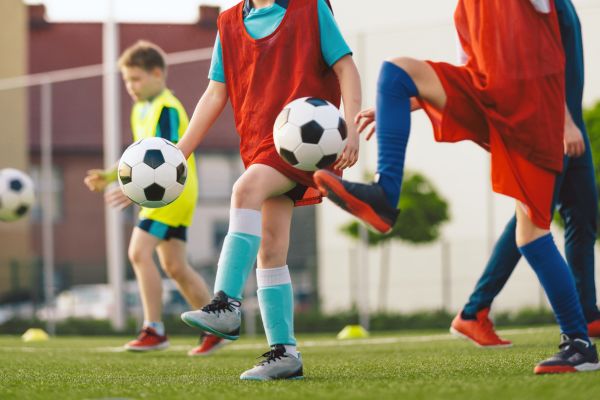
Soccer looks simple from a distance. A player receives the ball, moves past pressure, plays a pass, and the game continues. But anyone who has spent time on a field knows how much is hidden inside those few seconds. The first touch, the angle of the body, the way the foot cushions the ball, the small adjustment before a pass — all of it decides whether a player stays calm or loses control.
That is why ball control drills for soccer matter so much. They are not just warm-up exercises or beginner routines. They are the foundation of confident play. Good ball control helps players think faster, move with purpose, and stay composed when defenders close in. It gives a player that extra half-second that often makes the difference between keeping possession and giving the ball away.
Improving touch does not always require a full team, a large field, or advanced equipment. Many of the best drills can be done with one ball, a small space, and consistent practice. What matters most is focus, repetition, and learning to feel the ball rather than simply kick it.
Why Ball Control Is the Heart of Soccer
Every part of soccer connects back to ball control. Passing, dribbling, shooting, turning, shielding, and receiving all depend on how well a player manages the ball under different conditions. A player with poor control may have speed and strength, but the game often feels rushed. The ball gets stuck under the feet, touches become heavy, and pressure feels overwhelming.
A player with strong control plays differently. The ball stays close. The head comes up more often. Decisions become cleaner because the body is not constantly fighting to recover the ball. Even simple movements look smoother because each touch has a purpose.
Ball control also builds confidence. Young players especially can feel nervous when the ball comes to them during a match. They may panic, clear it away, or avoid taking responsibility. Regular control drills help remove that fear. The more familiar the ball feels at the feet, the more natural the game becomes.
The First Touch Drill
The first touch is one of the most important skills in soccer. A good first touch can open space, avoid pressure, and prepare the next action. A poor first touch can turn an easy situation into a problem.
A simple first touch drill starts with a player passing the ball against a wall or receiving it from a partner. The goal is not just to stop the ball, but to guide it into useful space. Instead of trapping it dead under the foot every time, the player should practice taking the ball slightly left, right, forward, or backward.
This drill teaches control with intention. In a real match, the first touch should rarely be random. It should help the player escape pressure or prepare a pass. Practicing with both feet is important because defenders quickly learn when a player only trusts one side.
The key is to stay light on the toes, keep the body open, and watch the ball carefully as it arrives. Over time, the touch becomes softer and more controlled. The ball starts going where the player wants it to go, rather than where it happens to bounce.
Cone Weaving for Close Control
Cone weaving is one of the classic ball control drills for soccer, and for good reason. It teaches players to keep the ball close while changing direction. The drill can be done with cones, shoes, bottles, or any small markers placed in a straight line.
The player dribbles through the markers using small touches. At first, speed does not matter. Control is the priority. The ball should stay near the feet, and each touch should be gentle enough to allow the next movement quickly.
As the player improves, the drill can become more challenging. The cones can be placed closer together. The player can use only the right foot, then only the left foot. Later, the inside and outside of the foot can be alternated. This develops coordination and comfort in tight spaces.
The mistake many players make is rushing through the drill too early. Fast feet are useful, but only when the ball stays under control. A slower, cleaner run through the cones is more valuable than a quick run where the ball is constantly escaping.
Inside and Outside Touches
Inside and outside touches help players become comfortable using different parts of the foot. This is essential because soccer is unpredictable. The ball does not always arrive perfectly, and defenders do not always give time to adjust.
To practice this drill, a player moves forward while touching the ball with the inside of the foot, then the outside of the same foot. After several yards, the player switches feet. The movement should feel rhythmic, almost like walking with the ball.
This drill improves balance and foot coordination. It also helps players learn how to shift the ball away from pressure. In games, a quick outside touch can create separation from a defender, while an inside touch can bring the ball back under control.
The upper body should stay relaxed. Players often become stiff when focusing on footwork, but good control needs natural movement. The shoulders, hips, and knees all help guide the ball.
Sole Rolls and Pullbacks
The sole of the foot is sometimes overlooked, but it is one of the best tools for close control. Sole rolls and pullbacks are especially useful in crowded areas where there is little room to dribble forward.
A sole roll is done by placing the bottom of the foot on top of the ball and rolling it across the body. The player can roll from right to left, left to right, or diagonally. This teaches control while changing the ball’s position quickly.
A pullback involves placing the sole on the ball and dragging it backward. From there, the player can turn, pass, or move in a new direction. It is a simple move, but very effective when a defender rushes in.
These drills help players slow the game down. Instead of kicking the ball away under pressure, they learn to use the sole to protect and redirect it. The movement may feel awkward at first, but with repetition it becomes a natural part of close control.
Juggling for Touch and Timing
Juggling is not only for showing skill. It develops touch, timing, balance, and concentration. Players who juggle regularly often become more comfortable with unpredictable bounces and aerial balls.
The goal does not have to be reaching hundreds of juggles. For beginners, even five controlled touches can be progress. The important thing is to keep the ball close and use soft contact. The foot should lift gently, not swing hard.
Players can start by dropping the ball from the hands, touching it once with the foot, and catching it again. Then they can try two touches, then three. Over time, they can use thighs, both feet, and even controlled headers.
Juggling teaches patience. The ball gives honest feedback. If the touch is too hard, it flies away. If the body is off balance, control disappears. That is what makes it such a useful training habit.
Wall Passing and Receiving
A wall can be one of the best training partners a soccer player has. Wall passing improves passing accuracy, receiving, reaction speed, and first touch. It also allows players to practice alone without needing a teammate.
The player passes the ball firmly against the wall and controls the return. The first touch should prepare the next pass. This can be done with two touches, then one touch as control improves.
Different variations keep the drill useful. A player can pass with the inside of the foot, receive across the body, use the weaker foot, or move side to side after each pass. The wall returns the ball quickly, which forces sharper reactions.
This drill is especially helpful because it feels close to real soccer. The ball comes back at different speeds and angles depending on the pass. The player must adjust constantly, just like in a match.
Tight-Space Dribbling
Soccer is often played in tight spaces. Midfielders receive under pressure, wingers get trapped near the sideline, and defenders must stay calm near their own goal. Tight-space dribbling helps players handle these moments.
A simple version is to create a small square using markers. The player dribbles inside the square without letting the ball leave the area. The focus is on quick turns, soft touches, and constant adjustment.
Players can practice using different surfaces of the foot: inside, outside, sole, and laces. They can also add turns such as pullbacks, Cruyff turns, and small cuts. The aim is not to perform tricks, but to stay in control when space is limited.
This drill builds comfort under pressure. When players know they can control the ball in a small area, they become calmer during crowded match situations.
Shielding the Ball
Ball control is not only about dribbling forward. Sometimes the best control is keeping the ball away from an opponent. Shielding teaches players how to use their body to protect possession.
To practice shielding, one player keeps the ball while a partner applies light pressure. The player in possession turns their body sideways, keeps the ball on the foot farthest from the defender, and uses their arm for balance and awareness without pushing.
The goal is to stay strong but relaxed. Shielding is about positioning, not wrestling. A player who shields well can hold the ball, wait for support, and avoid losing possession in difficult areas.
Even without a partner, players can practice turning with the ball and imagining pressure from different angles. Still, live pressure makes the drill much more realistic because it teaches decision-making along with control.
Changing Speed With the Ball
Many players can dribble slowly, and many can run fast. The real skill is changing speed while keeping control. A sudden burst after a slow touch can beat a defender more effectively than complicated footwork.
This drill begins with slow dribbling for a few steps, followed by an explosive push forward. The player then slows down again and repeats. The ball should be pushed far enough to allow acceleration, but not so far that a defender could easily intercept it.
Changing speed teaches players rhythm. Soccer is not played at one pace. A good dribbler knows when to slow down, draw a defender in, and then accelerate into space.
The drill also improves decision-making. Players begin to understand when close touches are needed and when a longer touch is useful.
Practicing With the Weak Foot
No player enjoys feeling awkward, but weak-foot training is necessary. A player who can only control the ball with one foot becomes predictable. Defenders notice it quickly and force play toward the weaker side.
Weak-foot ball control drills should be simple at first. Short passes against a wall, gentle cone dribbling, inside touches, and first touch practice are all useful. The goal is not perfection in one session. It is gradual comfort.
At first, the weaker foot may feel clumsy. That is normal. The important part is not avoiding it. Even ten minutes of weak-foot practice several times a week can make a noticeable difference.
A reliable weak foot gives a player more options. It opens passing angles, improves balance, and makes movement less predictable.
Building a Simple Ball Control Routine
The best training routine is one a player can actually repeat. It does not need to be long or complicated. A focused twenty-minute session can be more effective than an hour of distracted practice.
A good routine might begin with light juggling or toe touches to warm up. Then the player can move into cone weaving, first touch work, wall passing, and tight-space dribbling. Ending with weak-foot practice helps build discipline.
Quality matters more than rushing through exercises. Players should pay attention to the weight of each touch, the position of the body, and whether the head comes up between touches. In real games, players cannot stare at the ball forever. Training should gradually include awareness.
Consistency is where improvement happens. Ball control grows through repeated contact with the ball. The more touches a player gets, the more natural the relationship becomes.
Common Mistakes to Avoid
One common mistake is using touches that are too heavy. When the ball gets too far away, control becomes recovery. Players should focus on keeping the ball close enough to play the next touch quickly.
Another mistake is practicing only at comfortable speeds. Slow practice is useful for learning technique, but players eventually need to increase intensity. A drill should become more game-like as control improves.
Players also sometimes ignore their body shape. Good ball control is not only in the feet. The knees should be slightly bent, the body balanced, and the head lifting whenever possible. A player who controls the ball but never sees the field will still struggle in matches.
Finally, many players skip the weaker foot. It may not feel enjoyable, but it is one of the clearest ways to become a more complete player.
Conclusion
Ball control is built quietly. It comes from small touches, repeated movements, and the willingness to practice details that may not look exciting from the outside. Yet those details shape everything a player does on the field.
The best ball control drills for soccer help players develop comfort, confidence, and calmness under pressure. Cone work sharpens close touches. Wall passing improves receiving. Juggling builds timing. Tight-space dribbling teaches patience. Weak-foot practice opens the game.
Improving touch does not happen overnight, but it does happen. With regular practice, the ball starts to feel less like something to chase and more like something to guide. That is when soccer becomes more enjoyable. The player has more time, more choices, and more control over the rhythm of the game.